If you drive through winter in Reno and the surrounding Northern Nevada areas, you already know how unpredictable the conditions can be. One day you are dealing with dry, sunny roads, and the next you are navigating icy stretches, plowed highways, and treated surfaces after an overnight storm. These temperature swings, combined with road treatments, create an environment that is especially tough on vehicle paint.
For many drivers, road salt and de-icing materials are easy to overlook because they are not always visible once the roads dry. However, those materials remain on the surface of your vehicle long after the drive is over. In Northern Nevada, where snow events are often followed by dry, windy days, salt residue tends to linger and spread rather than wash away naturally.
In this article, we are not here to sell you on a product or promise unrealistic results. Our goal is to share what we see every winter, based on hands-on experience working with vehicles that are driven daily in these conditions. We rely on paint protection film on our own vehicles, and we have seen first-hand how different levels of protection hold up over time.
Everything that follows is grounded in real-world ownership, professional PPF installation experience, and long-term exposure to winter climates like Reno’s.
How Road Salt Affects Your Vehicle’s Paint Over Time
Road salt is designed to lower the freezing point of ice, but when it comes into contact with your vehicle’s paint, it becomes far less helpful.
At a chemical level, salt attracts moisture. When it settles on painted surfaces, especially in seams, edges, and lower panels, it creates a constant damp environment. Over time, this moisture works its way into microscopic imperfections in the clear coat, slowly breaking down the protective layers that shield your paint.
Several factors accelerate this process:
- Salt residue mixing with melting snow or road spray
- Repeated freezing and thawing cycles that expand and contract the paint surface
- Extended dry periods where salt remains on the car instead of being rinsed away
In Reno, this cycle is common. Snowfall is often followed by dry, cold days, which means salt does not always get washed off naturally. Instead, it sits on the vehicle, especially along rocker panels, lower doors, bumpers, and behind the wheels.
One of the biggest issues is that this damage rarely shows up overnight. Paint deterioration caused by salt is gradual. By the time discoloration, clear coat failure, or corrosion becomes visible, the damage has often been building for multiple seasons.
Why Reno Roads Create Unique Winter Risks for Vehicle Paint
Winter driving in Reno is not limited to one type of road or condition. Many drivers regularly move between city streets, highways, and higher-elevation routes, sometimes all in the same day.
Common winter routes around Reno include:
- Daily commuter roads within the city
- Highways connecting Reno to nearby communities
- Foothill and elevation-change routes that see heavier snow treatment
Elevation changes and wind play a major role in how road salt affects your vehicle. Strong winds push salty road spray higher up the sides of the car, while freeze-thaw cycles repeatedly stress the paint surface. Even when temperatures rise during the day, nighttime freezes allow salt and moisture to keep working against the clear coat.
Outside the city, higher driving speeds increase impact and abrasion risks. Salt particles, sand, and winter debris strike the front end and lower panels with more force, slowly wearing away unprotected paint. This combination of speed, exposure, and surface contamination makes winter damage more aggressive than many drivers expect.
The important thing to understand is that Reno does not need long, harsh winters to cause long-term paint wear. Even short winter seasons can leave lasting effects when salt exposure is repeated year after year.
What Paint Protection Film Does Differently Than Other Options
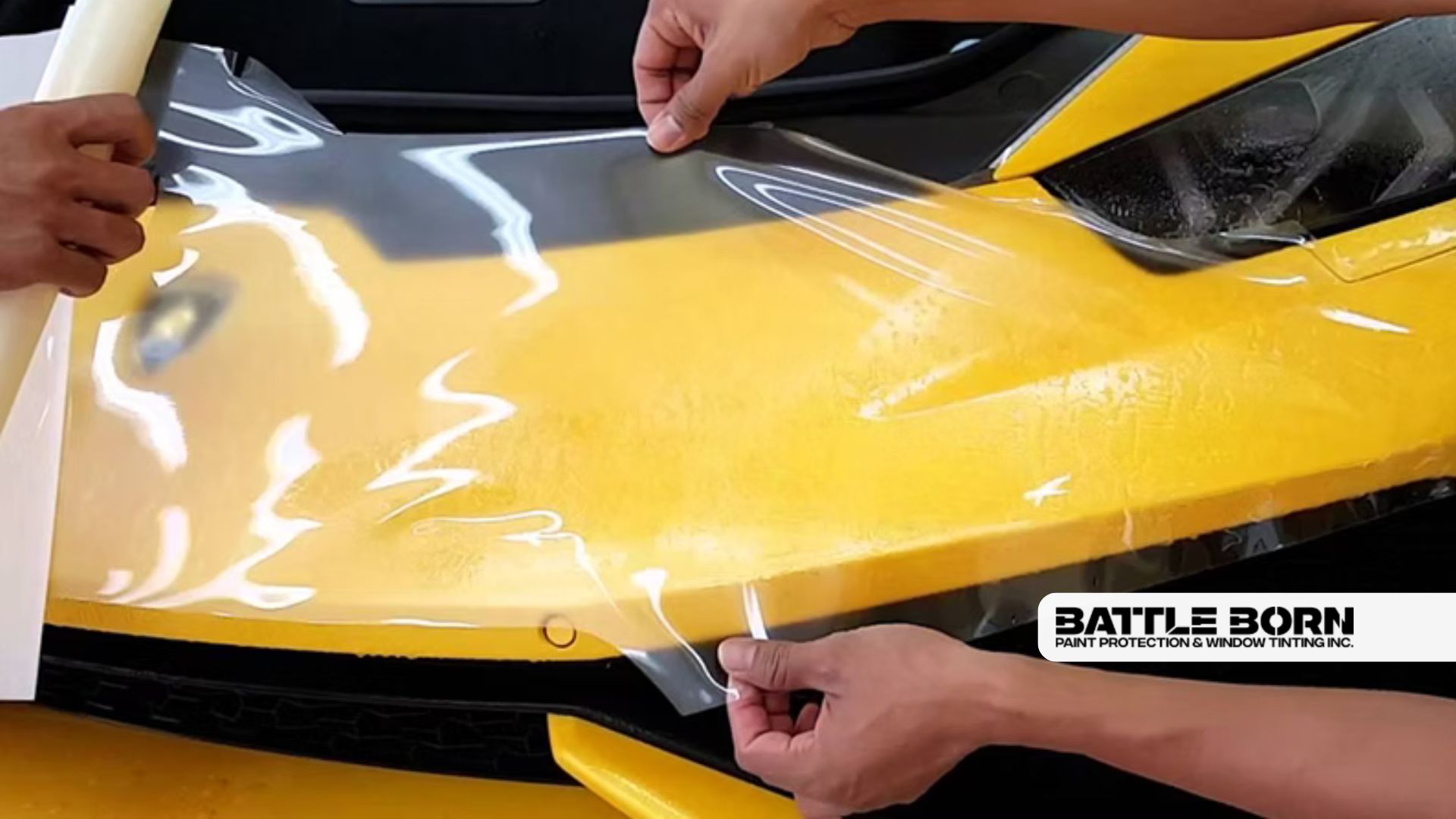
Paint protection film is a transparent, durable urethane layer designed to shield painted surfaces from physical and environmental damage. In winter environments like Reno, its role becomes especially important.
Unlike topical products, paint protection film creates a physical barrier between your paint and the elements. It absorbs the direct impact of salt spray, moisture, and abrasive debris before those contaminants ever reach the clear coat.
This protective layer works in several key ways:
- Blocks salt and moisture from contacting the paint surface
- Absorbs minor impacts from road debris and winter grit
- Reduces abrasion caused by dirty slush and wind-driven particles
This is where the concept of sacrificial protection matters. Over time, the film may show wear from winter driving, but that wear is happening to the film, not your factory paint. With proper PPF installation, the film can be replaced if needed, while the original paint remains intact. For long-term ownership in a climate like Northern Nevada, that distinction makes a measurable difference.
Compared at a high level to waxes or sealants, the difference is structural. Waxes and sealants sit on top of the paint and gradually break down with exposure. Paint protection film, on the other hand, is designed to take the abuse so the paint underneath does not have to.
The Importance of Proper PPF Installation for Winter Performance
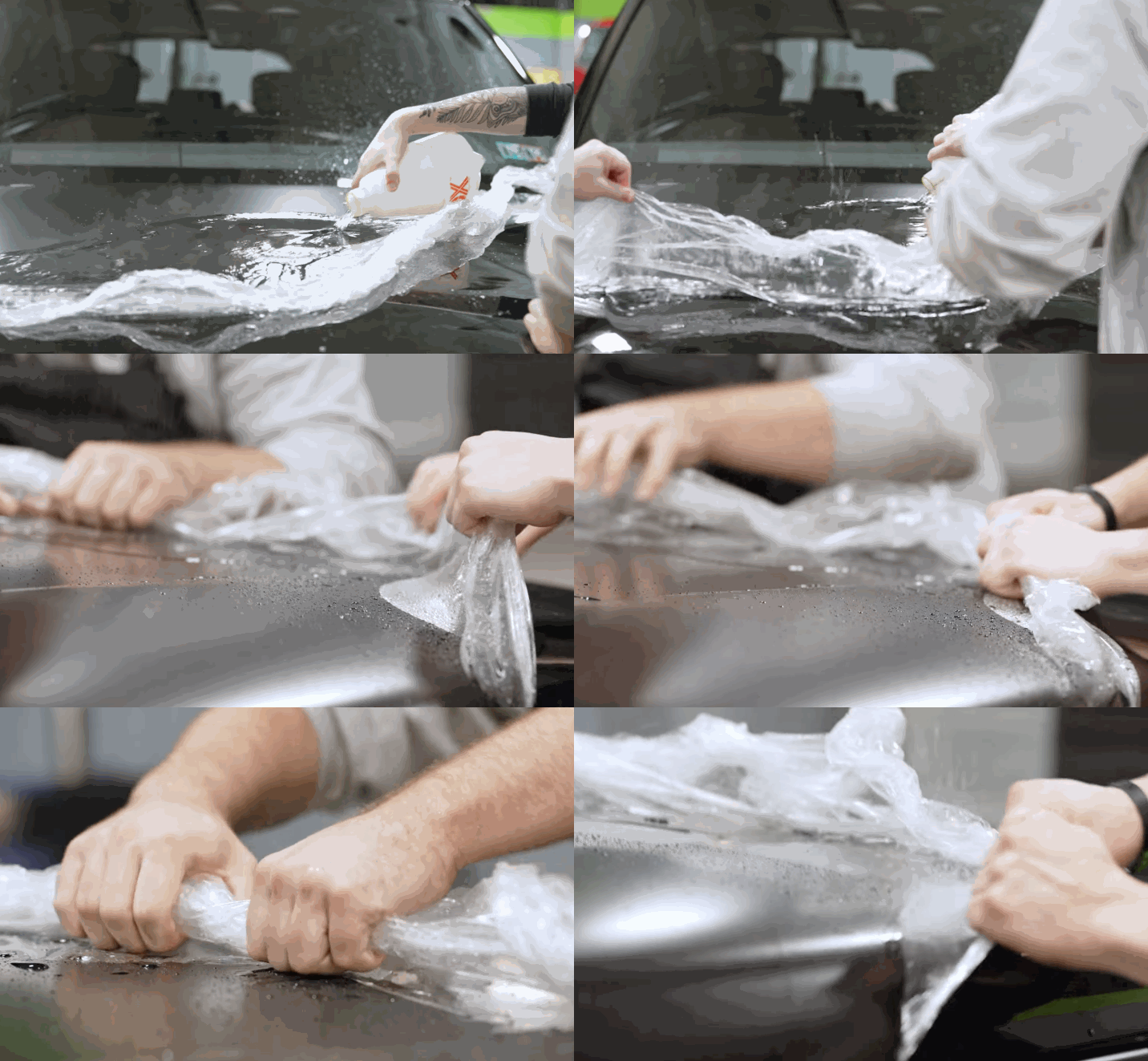
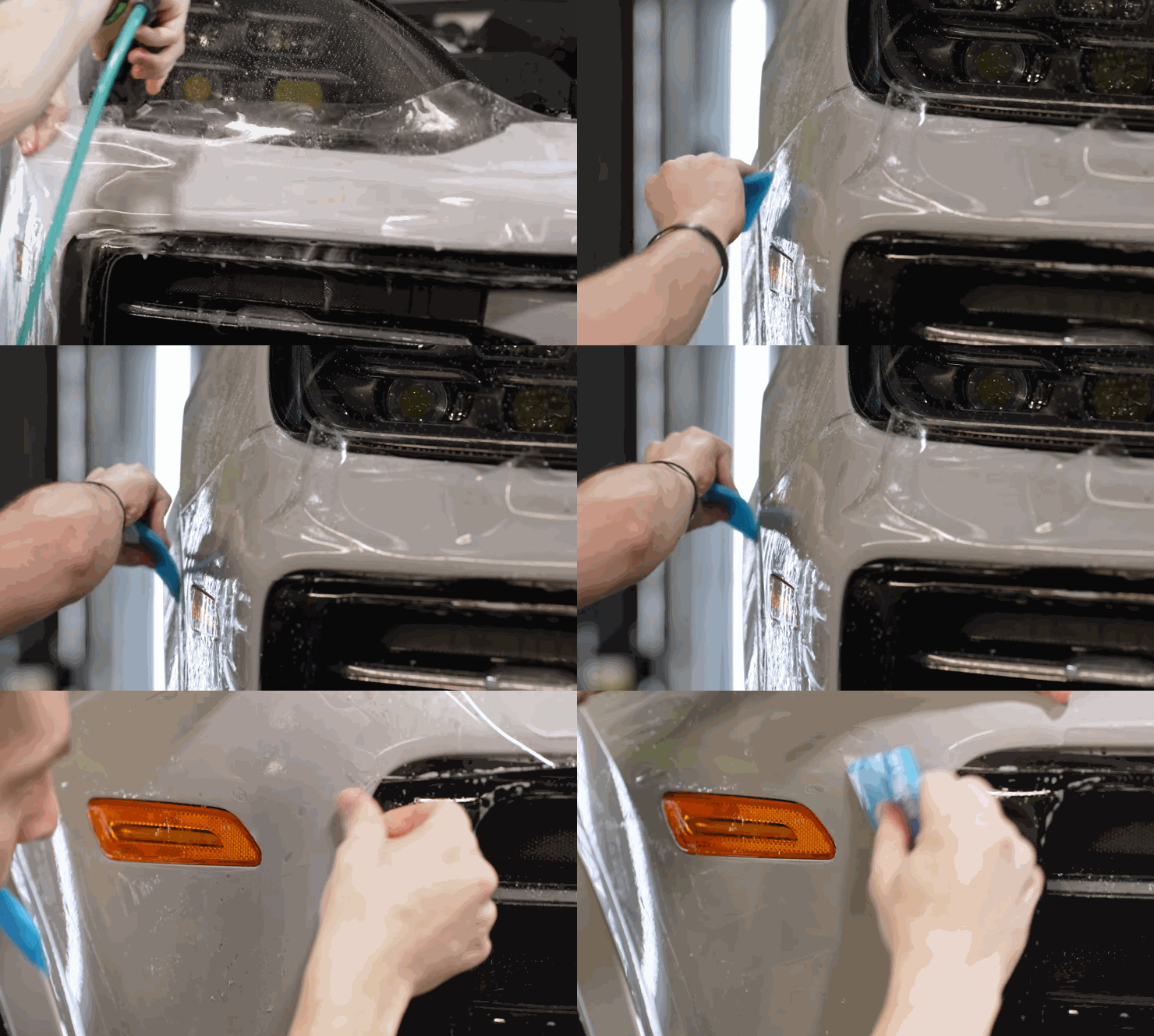
One thing we have learned over years of working with paint protection film is that the material itself is only part of the equation. In winter environments like Reno, professional PPF installation is what ultimately determines how well that protection holds up against salt, moisture, and abrasion.
A proper installation starts long before the film is laid on the vehicle. Surface preparation, edge sealing, and precise film alignment all play a critical role in winter durability. When the paint surface is fully cleaned, corrected if needed, and properly prepped, the film bonds evenly and consistently. This tight bond helps prevent contaminants from working their way underneath the film during repeated freeze-thaw cycles.
At a high level, quality installation focuses on:
- Thorough surface preparation to remove contaminants and residue
- Careful edge sealing to reduce exposure points
- Precise alignment so the film sits flat without tension or gaps
When PPF installation is rushed or done without attention to detail, small openings along edges or seams can allow moisture and salt to creep underneath the film. Once that happens, the protection is compromised, and the damage you were trying to prevent can still occur beneath the surface.
That is why working with a local installer who understands Reno winter conditions matters. At Battle Born, winter driving realities are part of every installation decision, from coverage recommendations to how edges and high-impact zones are finished.
High-Impact Areas Most Vulnerable to Salt Damage
Not every part of your vehicle is exposed to winter damage in the same way. Over time, we see very consistent patterns in where salt-related wear shows up first, especially on vehicles driven regularly through Reno winters.
The most vulnerable areas typically include:
- Front bumpers and grilles
- Leading edges of the hood
- Side mirrors and mirror caps
- Rocker panels and lower doors
- Areas behind the wheels
These panels take the brunt of salt spray and debris kicked up by traffic. Slush and treated road material are constantly thrown upward and outward, settling along lower body lines and front-facing surfaces. In Reno, where roads often dry quickly after storms, salt residue remains on these areas rather than being washed away.
Everyday driving habits also play a role. Commuting on highways, traveling outside the city, or driving through foothill areas increases exposure due to higher speeds and rougher road conditions. This is why targeted protection is often a practical approach. Focusing on the panels that see the most abuse allows paint protection film to work where it matters most, without overcomplicating the strategy.
Long-Term Ownership Benefits of Paint Protection Film in Reno
From a long-term ownership perspective, paint protection film is not just about getting through one winter. It is about preserving the vehicle’s appearance and paint health year after year.
When paint is consistently shielded from salt exposure and abrasion, it retains its gloss and integrity far longer. That preserved condition becomes especially valuable when it is time to sell or return a leased vehicle. Clear coat failure, corrosion spots, and visible wear are all red flags during resale evaluations and lease return inspections.
One of the biggest advantages of paint protection film is the ability to replace the film instead of repairing paint. Repainting panels is costly and often difficult to match perfectly. Replacing worn film, by contrast, restores protection while keeping the original paint intact.
Speaking from personal experience, running paint protection film through multiple winter seasons in climates like Reno has shown us how much damage never happens in the first place. The film takes the abuse, and the paint underneath stays consistent year after year.
Ready to Upgrade Your Ride?
Common Misconceptions About Road Salt and Paint Protection Film
A common belief we hear is that regular washing is enough to prevent salt damage. While washing absolutely helps, it does not eliminate the risk entirely. Salt residue can still sit in seams, edges, and lower panels between washes, especially during busy winter weeks.
It is also important to understand what paint protection film can and cannot do. PPF does not make a vehicle indestructible, and it does not eliminate the need for maintenance. What it does is significantly reduce direct exposure of paint to salt, moisture, and abrasion, which are the primary drivers of winter-related damage.
Realistic expectations matter:
- Paint protection film reduces damage, it does not prevent all impact
- Proper PPF installation is critical to performance
- Maintenance still plays a role in long-term results
We prefer to explain protection based on experience rather than hype. When expectations are clear and the product is used correctly, paint protection film proves its value over time, especially in Northern Nevada winter conditions.
Choosing the Right PPF Installation Partner in Reno
Selecting the right shop for PPF installation is just as important as choosing the film itself. In a winter environment like Reno, installation quality and local experience directly affect how well the protection performs over time.
When evaluating a local provider, vehicle owners should pay attention to a few core factors:
- Clear communication about how the vehicle is used and driven year-round
- A thorough inspection process before recommending coverage or installation
- Realistic explanations of what paint protection film can and cannot do
Strong communication sets the foundation. A reputable installer should take the time to understand where you drive, how often you are on highways, and how your vehicle is exposed during winter months. Inspection standards also matter. Looking closely at paint condition, panel edges, and high-impact zones allows for smarter decisions and better long-term results.
There is also real value in working with installers who are familiar with Reno’s specific driving conditions. Local knowledge of winter road treatments, elevation changes, and seasonal weather patterns helps guide proper coverage and installation techniques. That is why we view Battle Born as a knowledgeable local resource rather than a one-size-fits-all solution. Experience with Northern Nevada roads makes a meaningful difference when protecting a vehicle for the long haul.
Conclusion: Protecting Your Vehicle From Reno’s Winter Road Conditions
Road salt may seem like a short-term inconvenience, but over time it contributes to gradual paint damage that is often difficult and expensive to reverse. Moisture retention, freeze-thaw cycles, and abrasive debris all work together to wear down unprotected paint surfaces, even during relatively short winter seasons.
When properly installed, paint protection film provides a durable barrier that helps reduce winter-related corrosion and abrasion. It limits direct exposure to salt and moisture, absorbs minor impacts, and preserves the integrity of the paint underneath. In a climate like Reno’s, where treated roads and rapid weather changes are common, that added layer of defense plays a practical role in long-term ownership.
From our perspective, the value of paint protection film comes from seeing what does not happen to the paint over time. Panels stay cleaner, wear develops more slowly, and replacing film is far easier than repairing damaged paint. For drivers who want to make informed decisions about protecting their vehicles, feel free to contact us today for a free quote. Battle Born remains a trusted local resource grounded in experience, transparency, and real-world winter driving conditions.
BATTLE BORN PAINT PROTECTION AND WINDOW TINTING
4.9  179 Google reviews
Window tinting service in Reno, Nevada